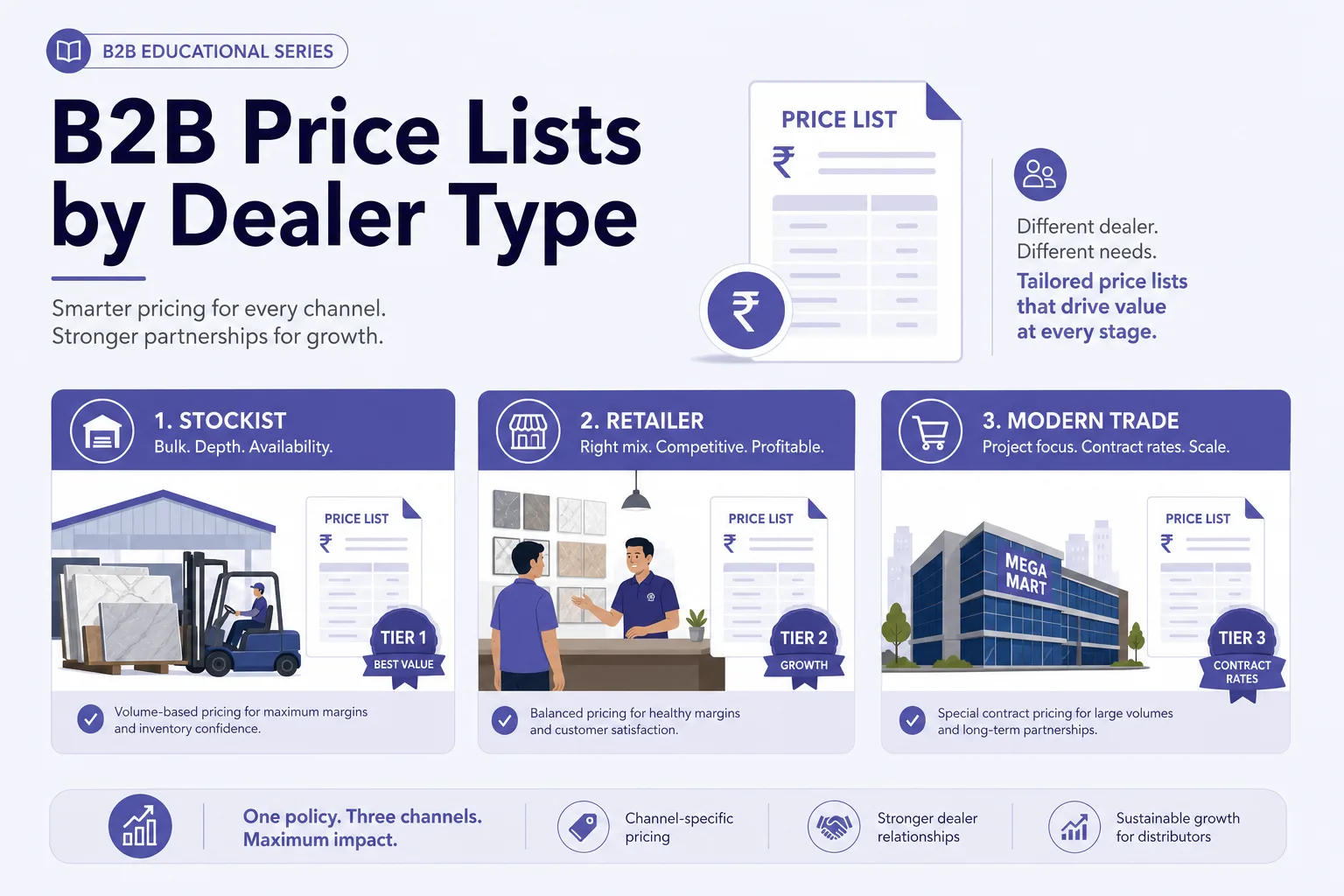
Most wholesale teams still ship one price PDF and “adjust on WhatsApp.” Stockists expect deep slabs. Retailers need a short list they can reorder from. Modern trade wants contract rates and assortment control. One sheet cannot tell all three the truth — so reps invent a fourth price in chat.
This playbook shows how to build dealer-type price lists that field teams will use, what belongs on the page, and how to change rates without a PDF forwarding war.
Why one PDF price list fails
- Wrong audience sees the wrong slab — margin leak or lost order
- No effective date — dealers argue from last festival’s file
- Internal codes only — counter staff cannot find the SKU
- Schemes whispered separately — eligibility fights later
- Version chaos — three PDFs in three WhatsApp groups
Segments that matter in Indian wholesale
Start with three tiers. Add more only when sales leadership can explain the rule in one sentence.
- Stockist / distributor — deeper slabs, higher MOQ, scheme-heavy
- Retailer / dealer — shorter assortment, clear trade vs MRP story
- Modern trade / key account — contract rates, controlled SKUs
- Optional later: geography or channel overlays — only with an owner
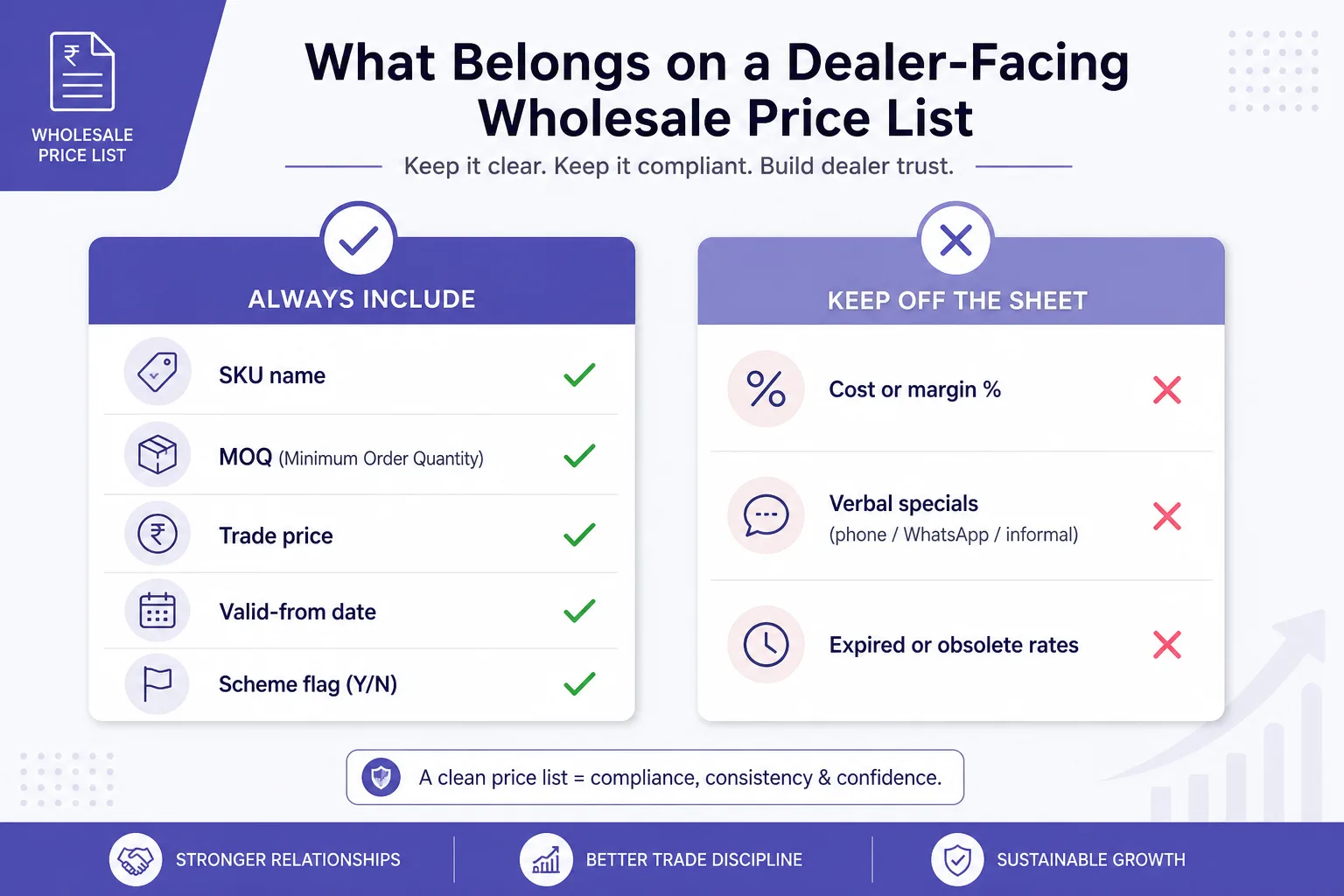
What belongs on each list
- Buyer-visible SKU name (and pack size)
- MOQ / outer packing rules
- Trade price for that dealer type
- Valid-from (and valid-to if temporary)
- Scheme eligibility flag or “see scheme card” — not a mystery discount
Digital list vs PDF
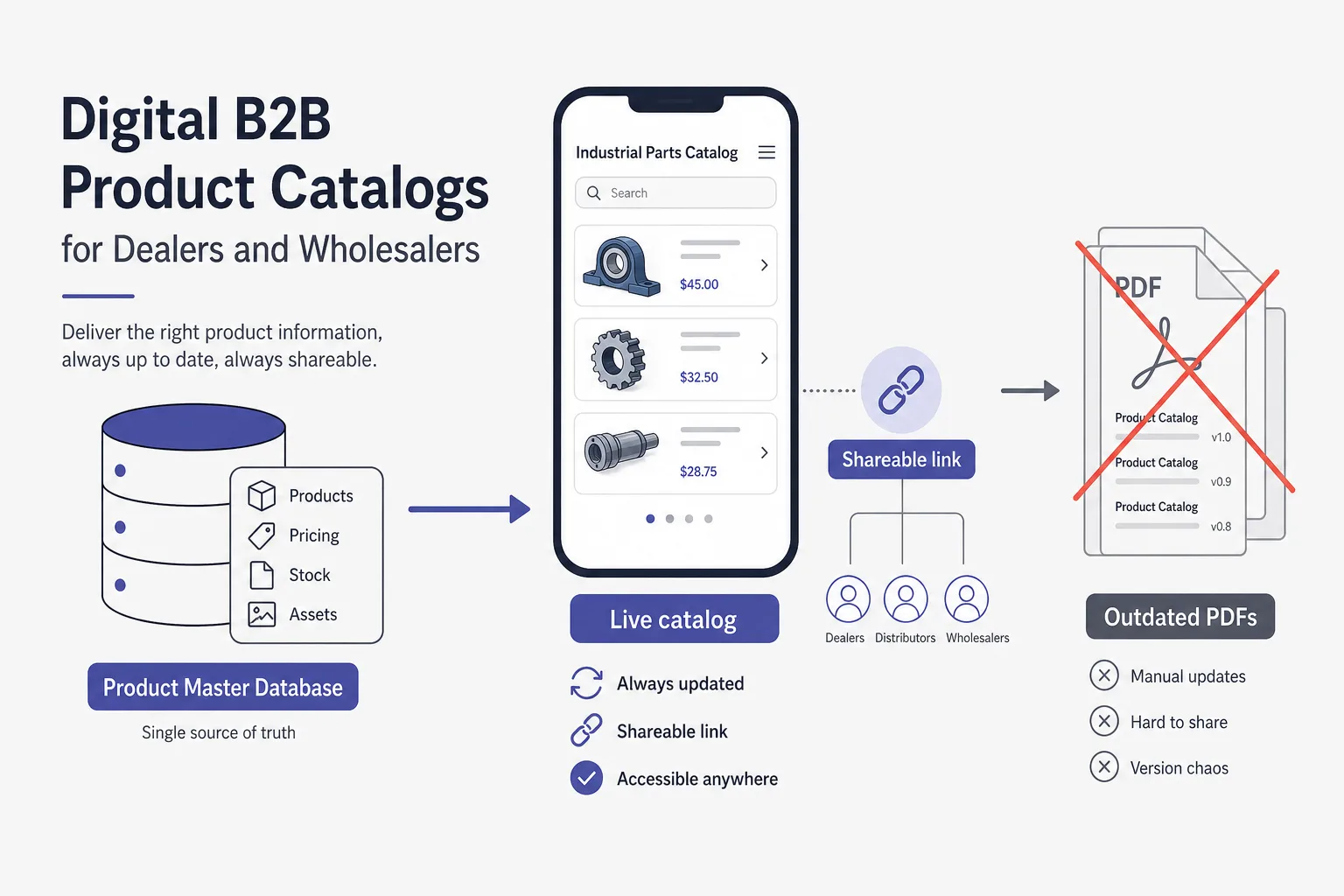
PDFs are fine as an export. They are a poor system of record. A digital catalog tied to dealer type updates once; every PDF forward is a potential stale rate.
- Publish from one product master — hide SKUs by audience
- Share link per segment or account — not a mega PDF
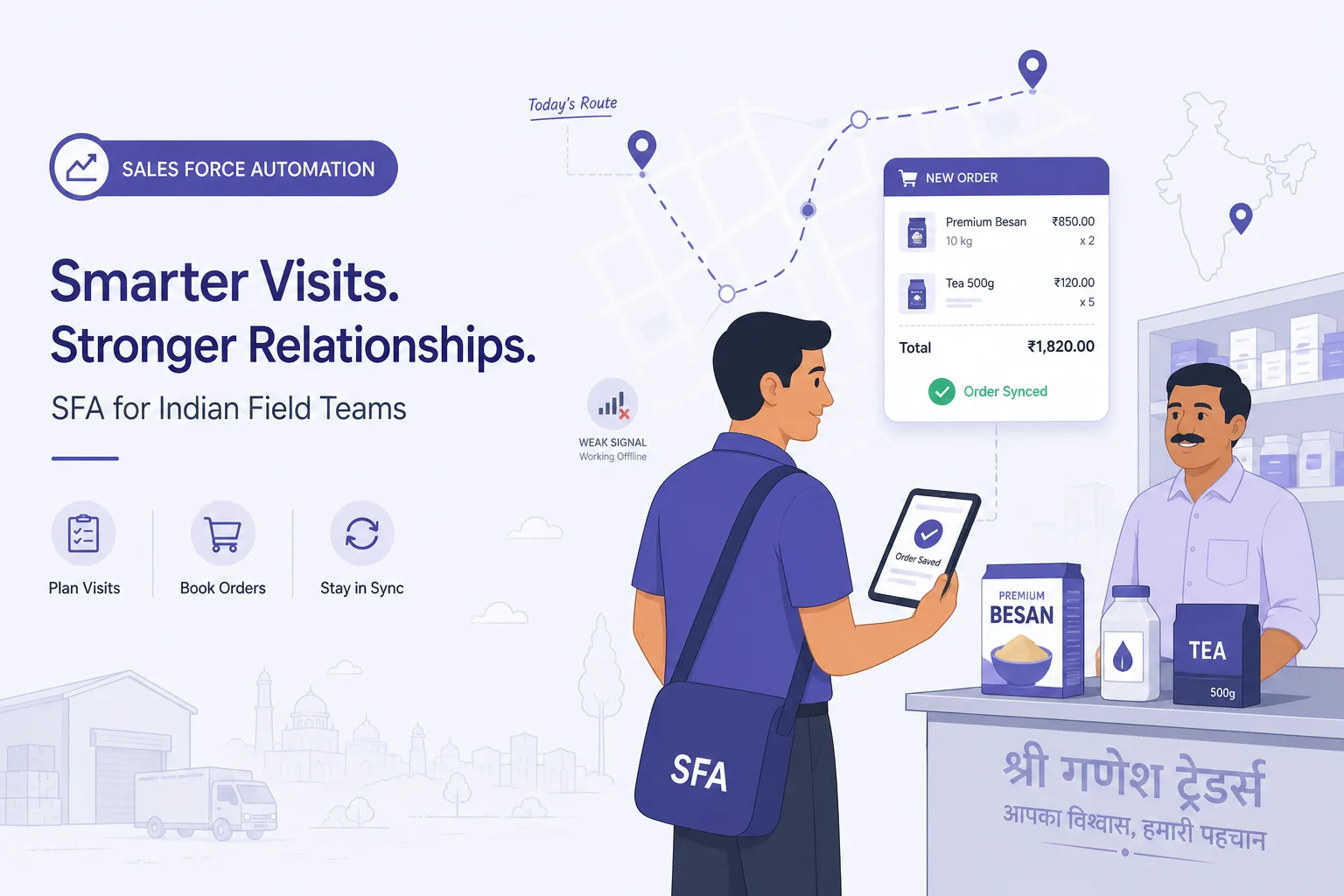
- Field app shows the same rate the portal shows
- Export PDF only when a buyer insists — dated and watermarked
Change control that survives peak season
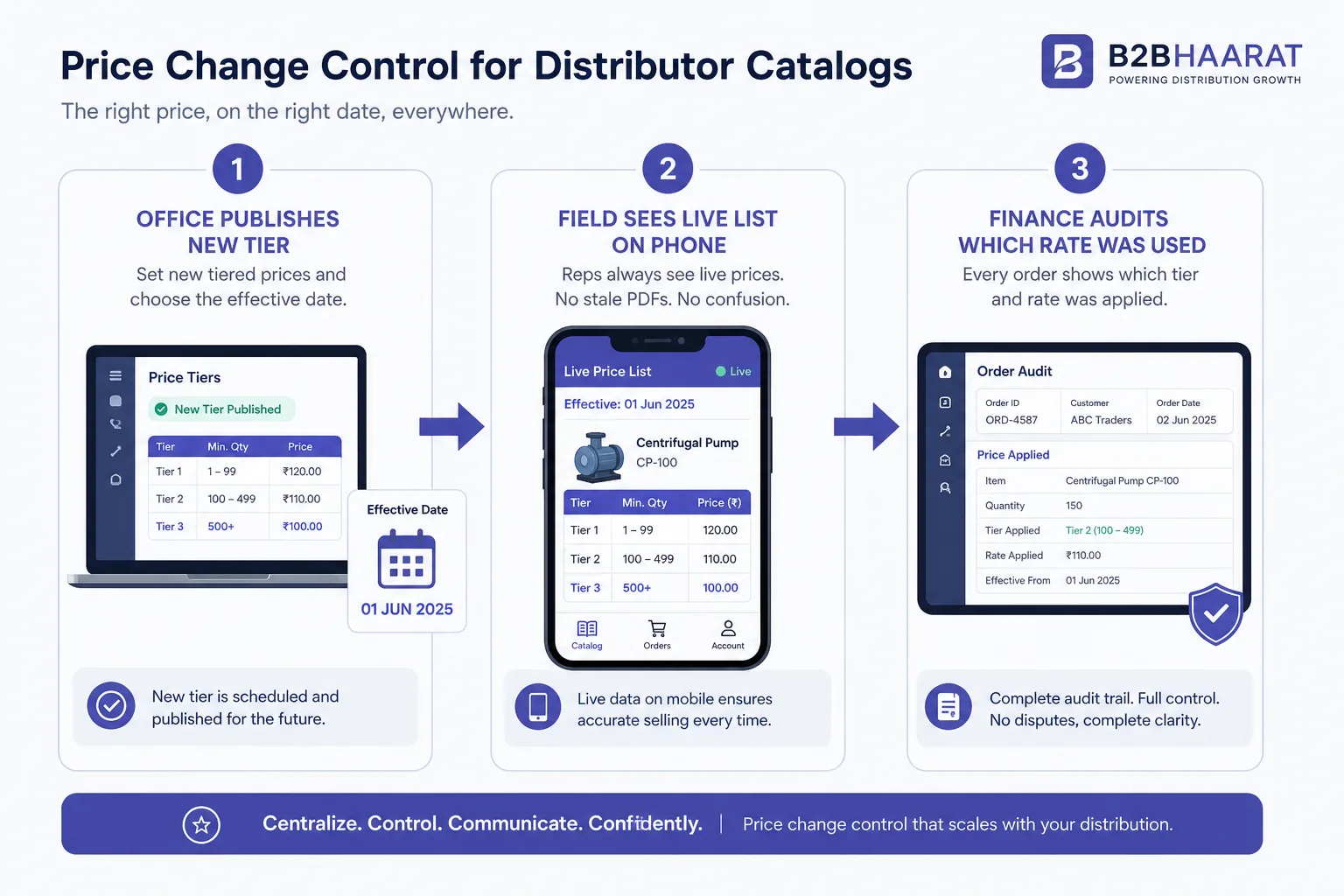
- Office sets effective date and publishes the tier
- Pilot dealers notified before full blast
- Field books only against live list for the pilot window
- Exceptions ticketed — not “temporary forever” in chat
- Finance samples orders for rate vs published list
Pilot metrics (2–3 weeks)
- % of orders on correct dealer-type price
- Price-dispute chats per week on pilot accounts
- Time to publish a rate change to field
- Stale PDF forwards still circulating (should trend to zero)
- Scheme overrides outside the list
If reps need a private Excel to know the real price, your published list is fiction.
Field coaching pattern
Questions for catalog / pricing vendors
- Can prices differ by dealer type without a side spreadsheet?
- Do mobile and portal share the same live rates?
- How are effective dates and retired SKUs handled?
- Can schemes attach without rewriting the base list in chat?
- Who sees margin — dealers never should
B2Bhaarat helps teams publish controlled catalogs from one product master with buyer-appropriate pricing — so dealer-type lists stay live instead of dying as WhatsApp PDFs.
Frequently asked questions
Why maintain separate B2B price lists by dealer type?
Stockists, retailers, and modern trade expect different slabs, MOQs, and assortments. One PDF for everyone pushes the real price into WhatsApp and leaks margin. Segmented lists keep the published rate trustworthy.
What belongs on a dealer-facing wholesale price list?
Buyer-visible SKU name, pack/MOQ, trade price for that type, effective dates, and clear scheme eligibility — not cost, margin %, or verbal specials. B2Bhaarat catalogs are built to publish from one master with buyer-appropriate pricing.
How does B2Bhaarat help with dealer-type pricing?
B2Bhaarat helps teams publish controlled digital catalogs from one product master so field and dealers see live rates for their type — instead of forwarding stale PDFs every revision.