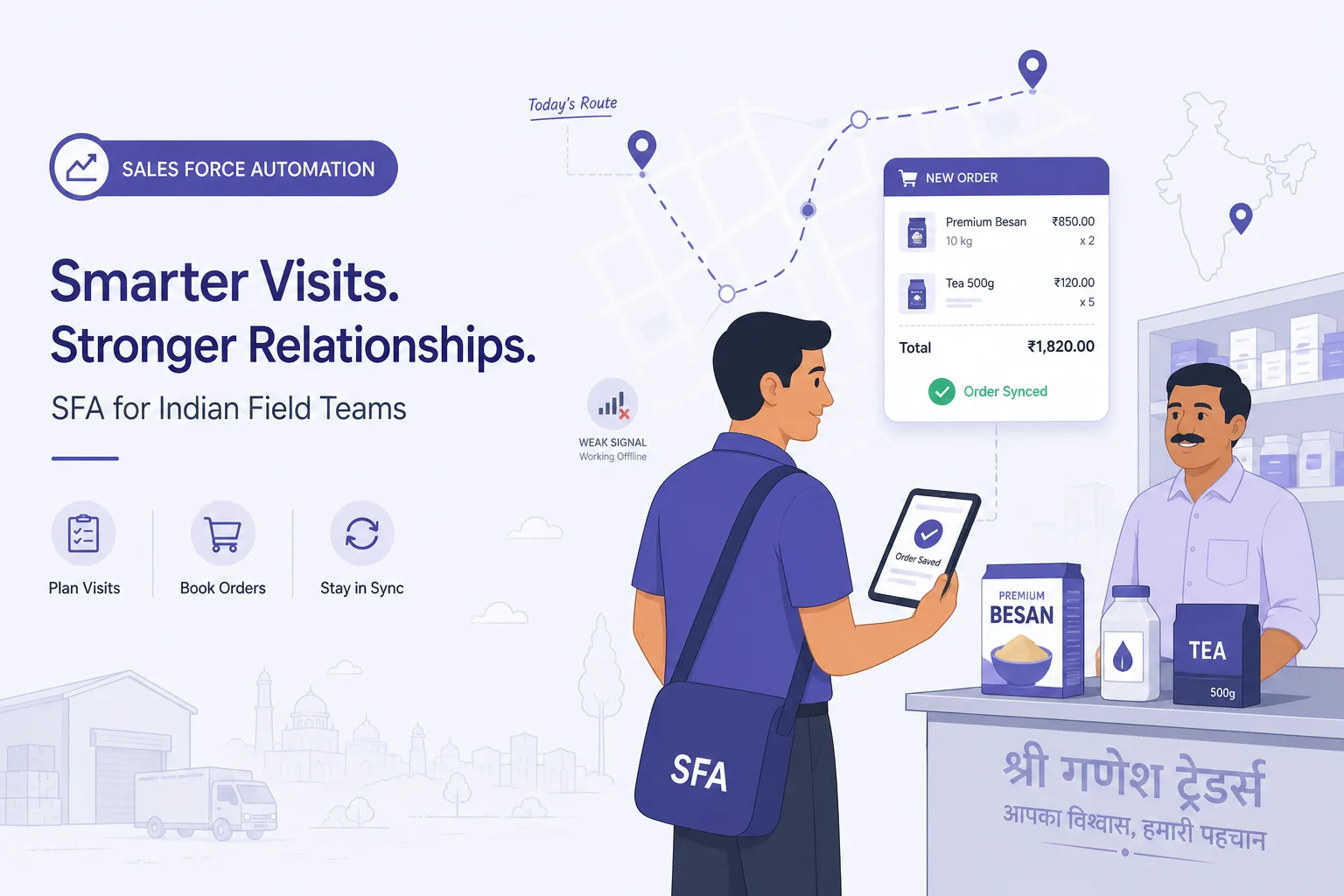
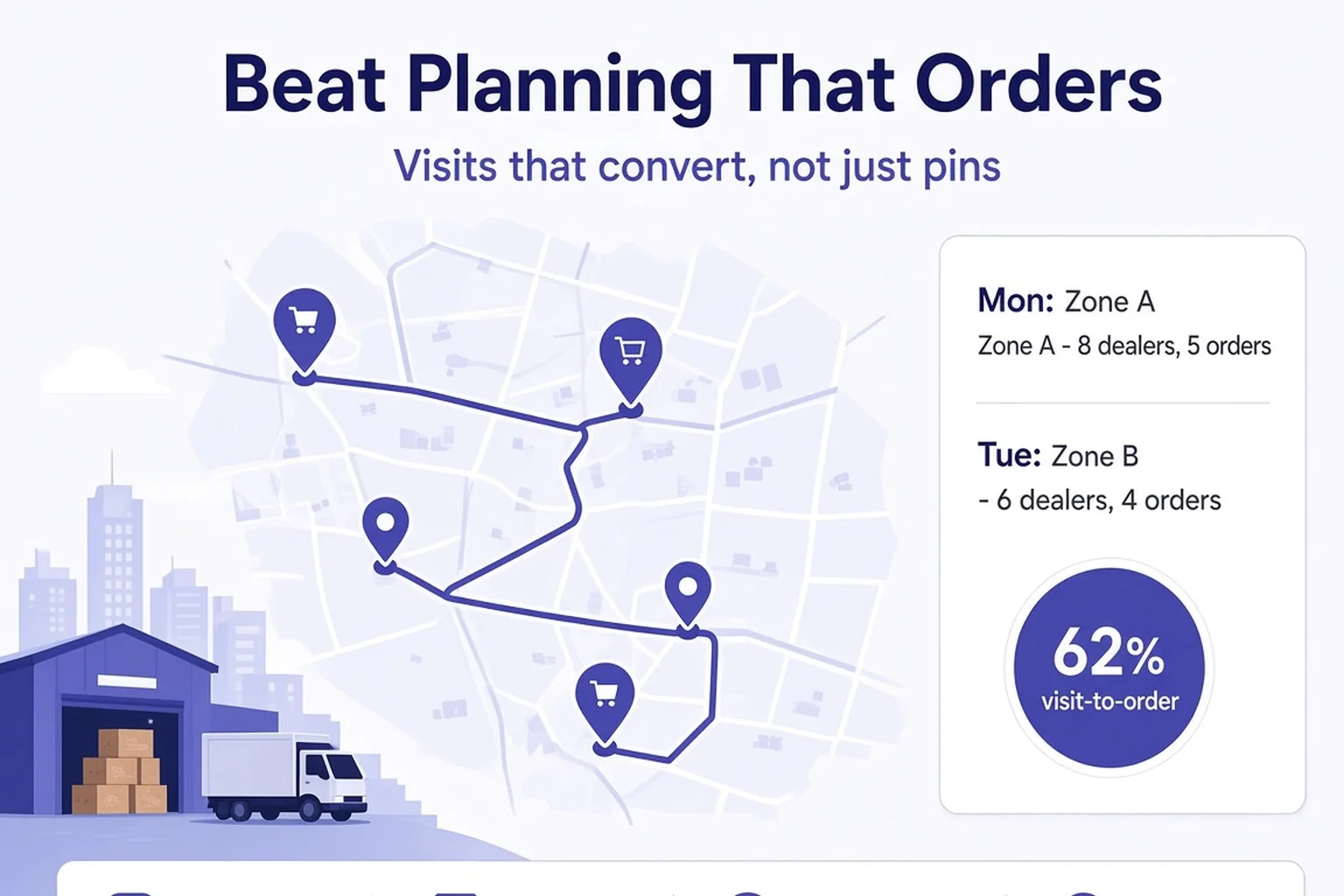
Sales heads inherit beats from history — same sequence, same outlets, declining yield. Beat planning should start from revenue opportunity and order cadence, not only geography.
Prioritise outlets by order potential
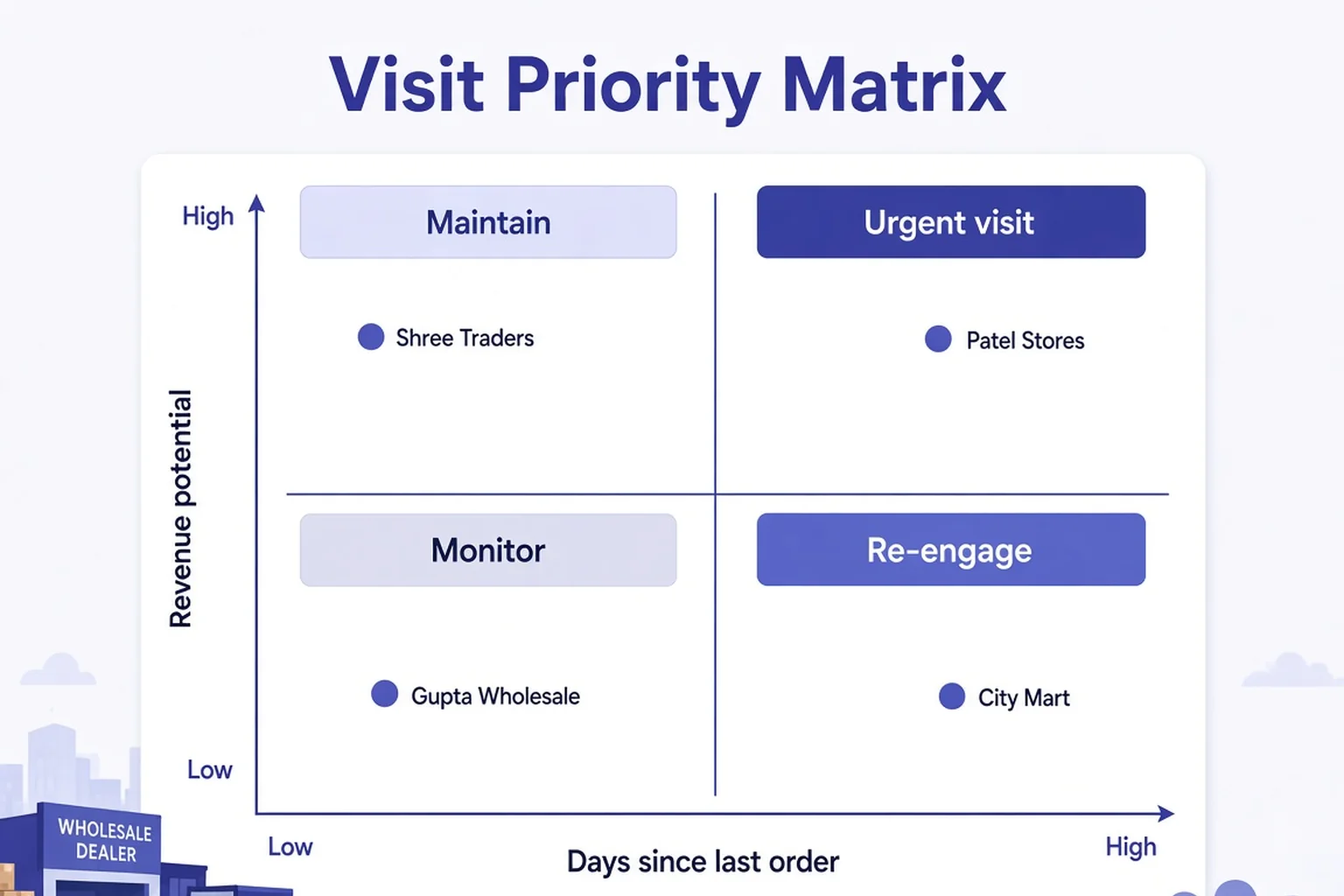
- High revenue, overdue reorder — must visit
- Growing account — weekly touch in season
- Credit hold — visit with finance clarity, not a pitch
- Long-tail low volume — phone or fortnightly, not daily drive-by
Weekly plan template
- Monday — publish beat with target order value per rep
- Each visit — open customer: last order, outstanding, schemes
- Book in-app or log why not — competitor, stock, credit
- Friday — productive visit rate review, adjust next week
Avoid GPS theatre
Tracking without booking discipline trains reps to perform compliance. Fix prices, offline booking, and sync first — then add coverage analytics.
Metrics for the beat review
- Planned vs visited outlets
- Productive visit %
- Order value per beat day
- WhatsApp-only exceptions
- Average days since last order on beat
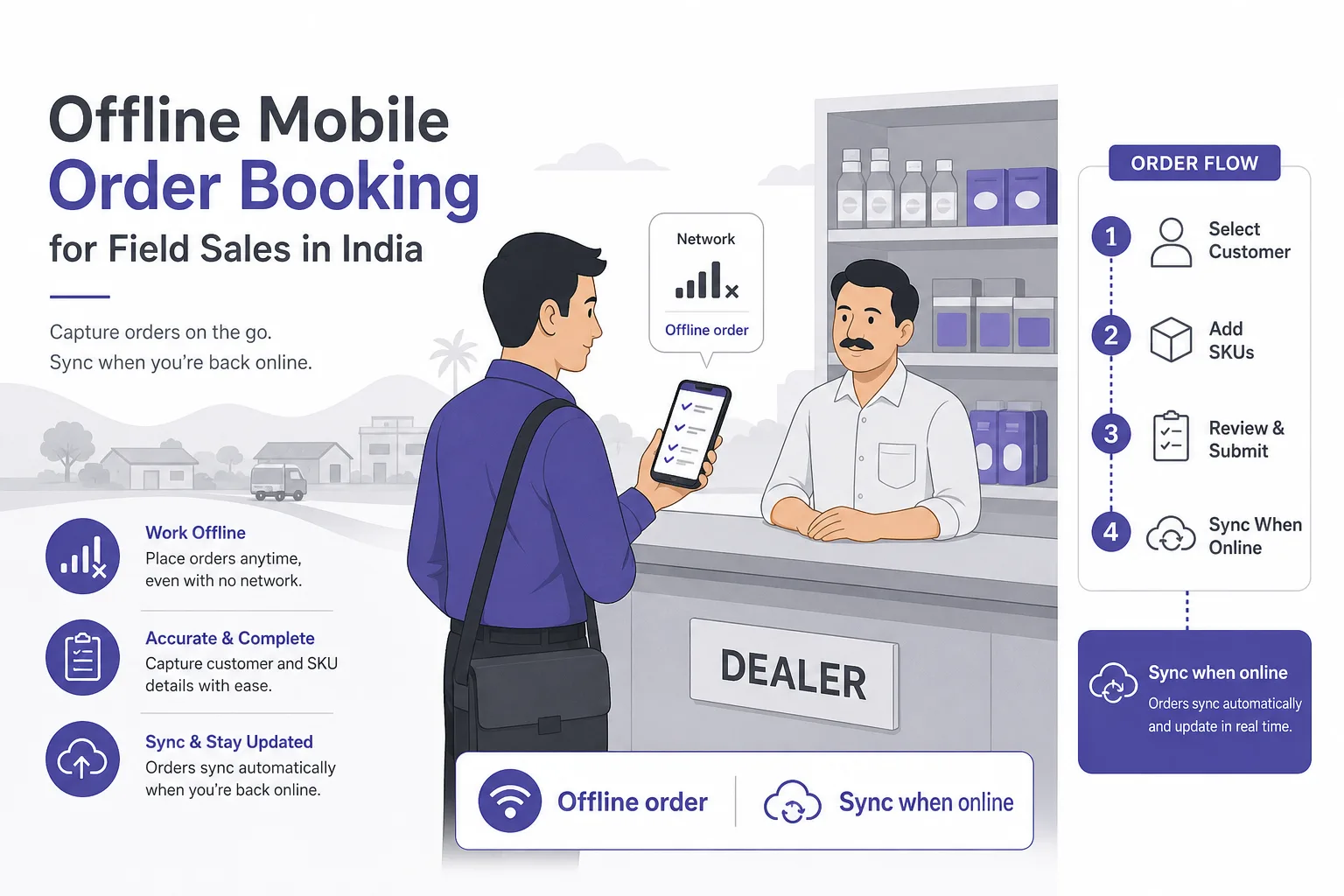
B2Bhaarat mobile supports offline booking on the beat with customer history reps can trust — so visits convert to orders the office sees the same day.
Frequently asked questions
What is beat planning for distributor field teams?
Beat planning prioritises which dealers to visit based on reorder potential, revenue, and credit status — not only geography. Productive visits should create in-system orders or logged follow-ups.
How is a productive sales visit defined in wholesale?
A visit that produces an in-system order ID or a documented reason with a follow-up date — not merely a GPS check-in. B2Bhaarat mobile supports offline booking so beats convert to orders the office sees the same day.
How does B2Bhaarat support beat planning?
Reps open customer records with last order, outstanding, and schemes before the visit, then book offline on the beat. Sales heads review productive visit rate from live order data, not travel logs alone.