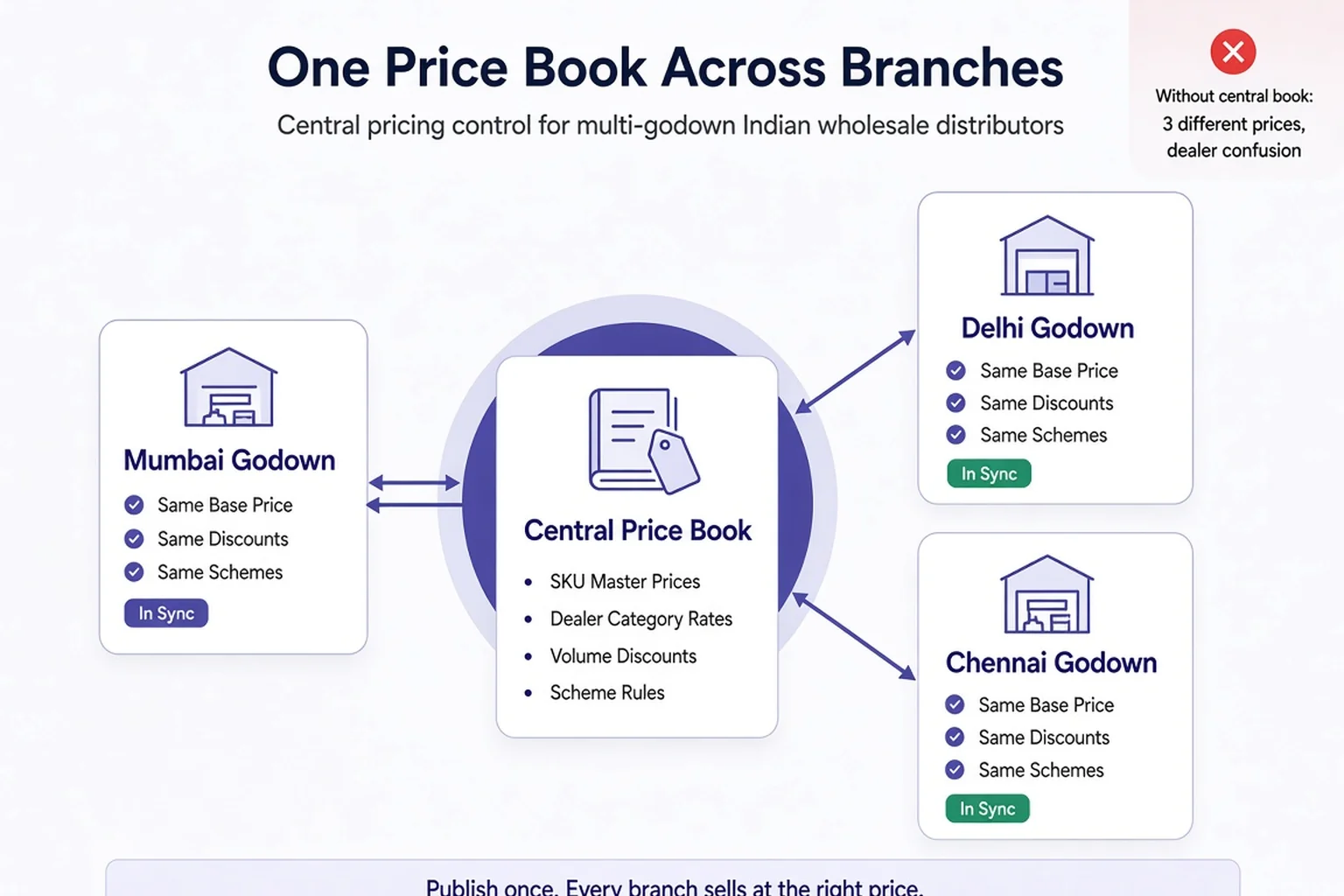
Multi-branch distributors scale geography faster than they scale discipline. Each godown gets a local Excel. Dealers compare prices branch to branch. Sales says flexibility; finance says leakage.
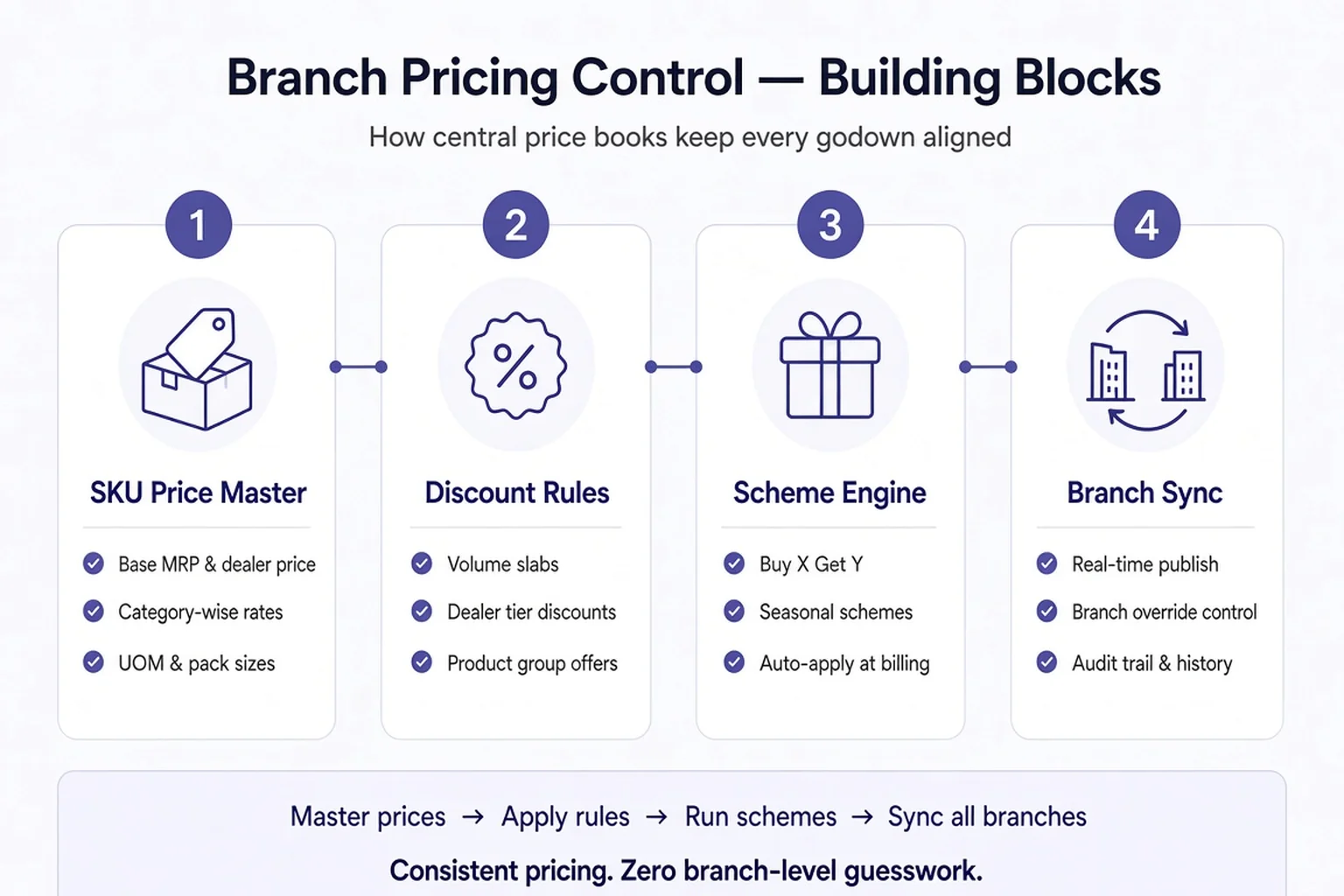
The goal is not zero local exception — it is one published price book with controlled overrides, visible effective dates, and stock context per godown.
Failure modes of branch-local pricing
- Same SKU, three branch prices, one angry dealer
- Scheme runs nationally but price base differs by branch
- Transfer stock between godowns with pricing confusion
- Field rep quotes branch A rates while dispatch is branch B
What one price book still allows
- Dealer-type tiers — stockist vs retailer — nationwide
- Freight or zone adders — configured, not verbal
- Time-bound promotions — same dates everywhere
- Named override with approver — logged, not WhatsApp
Rollout sequence
- Merge branch Excels into one master — dedupe SKUs first
- Pick one pilot branch for in-system booking only
- Publish effective date — retire PDFs on that date
- Expand branch by branch after two stable weeks
- Review override log weekly at HQ
B2Bhaarat publishes catalogs and buyer-type pricing from one product master — so branches share a price book even when stock sits in different godowns.
Frequently asked questions
Why use one price book across distributor branches?
Branch-local rate lists create dealer confusion, margin leaks, and scheme fights. One published price book with controlled overrides keeps counter and field quoting the same truth.
Can branches have different stock but same prices?
Yes — fulfilment can be local by godown while pricing and schemes stay central. B2Bhaarat publishes catalogs from one product master with buyer-type pricing nationwide.
How does B2Bhaarat help multi-branch distributors?
B2Bhaarat helps HQ publish one catalog and price book while branches book against shared masters — reducing WhatsApp PDF rate lists per godown.