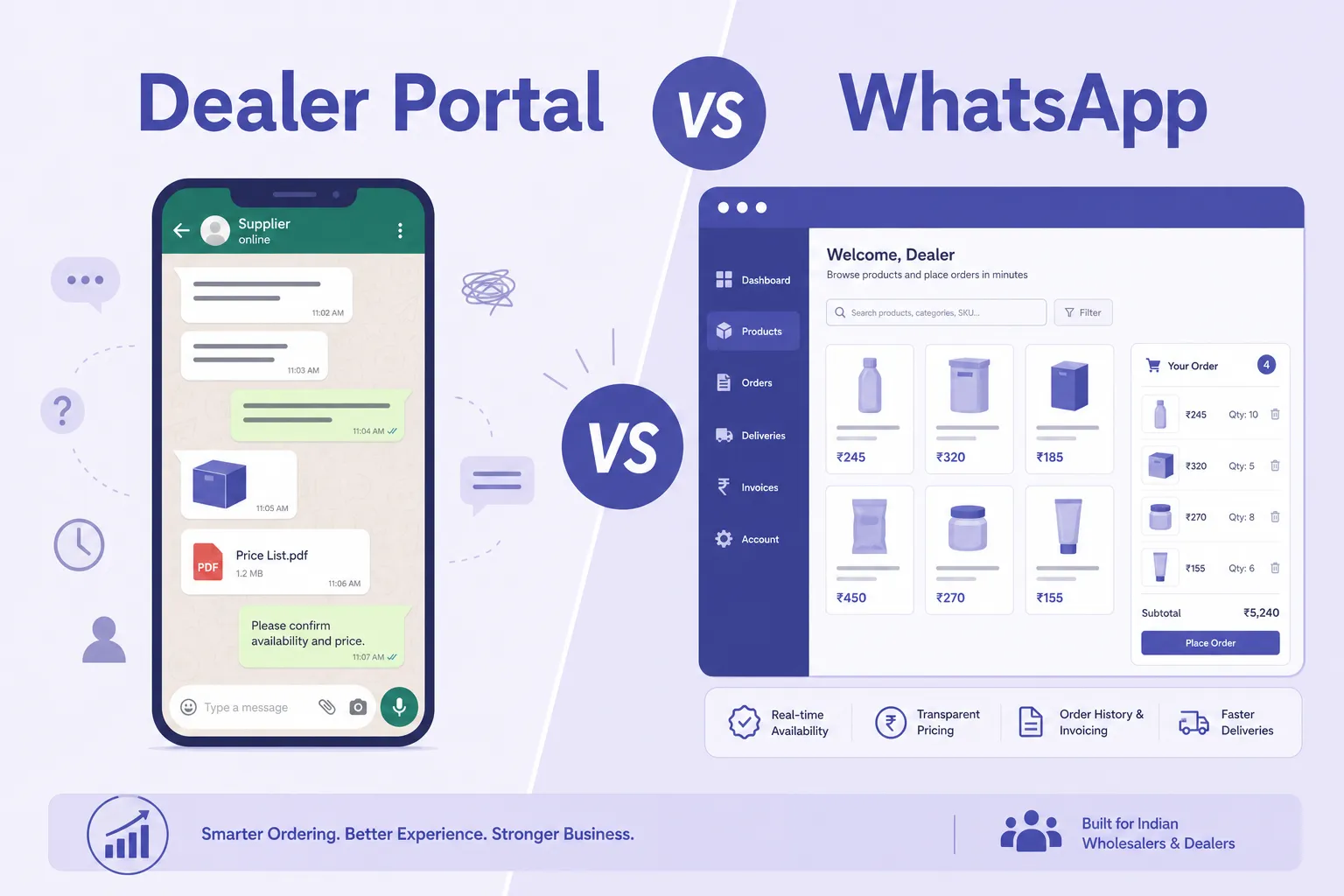
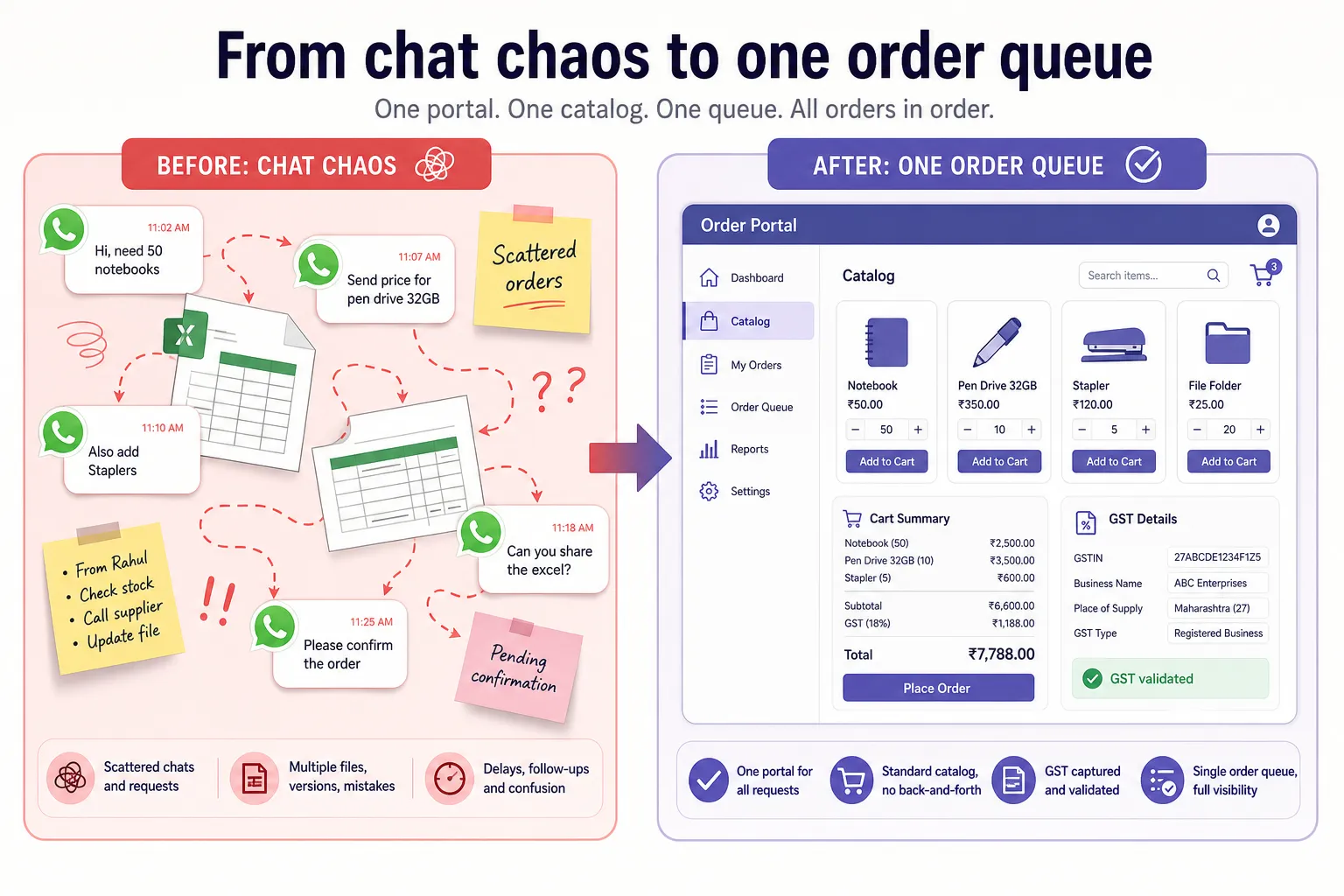
Search “B2B ecommerce platform” and you will get retail storefront demos with flashy carts. That is not how most Indian wholesale works. Your buyers are dealers and distributors. Prices change by account type. Schemes have slabs. GSTIN and HSN matter on day one. Orders still arrive as voice notes and Excel sheets when the system fails the counter.
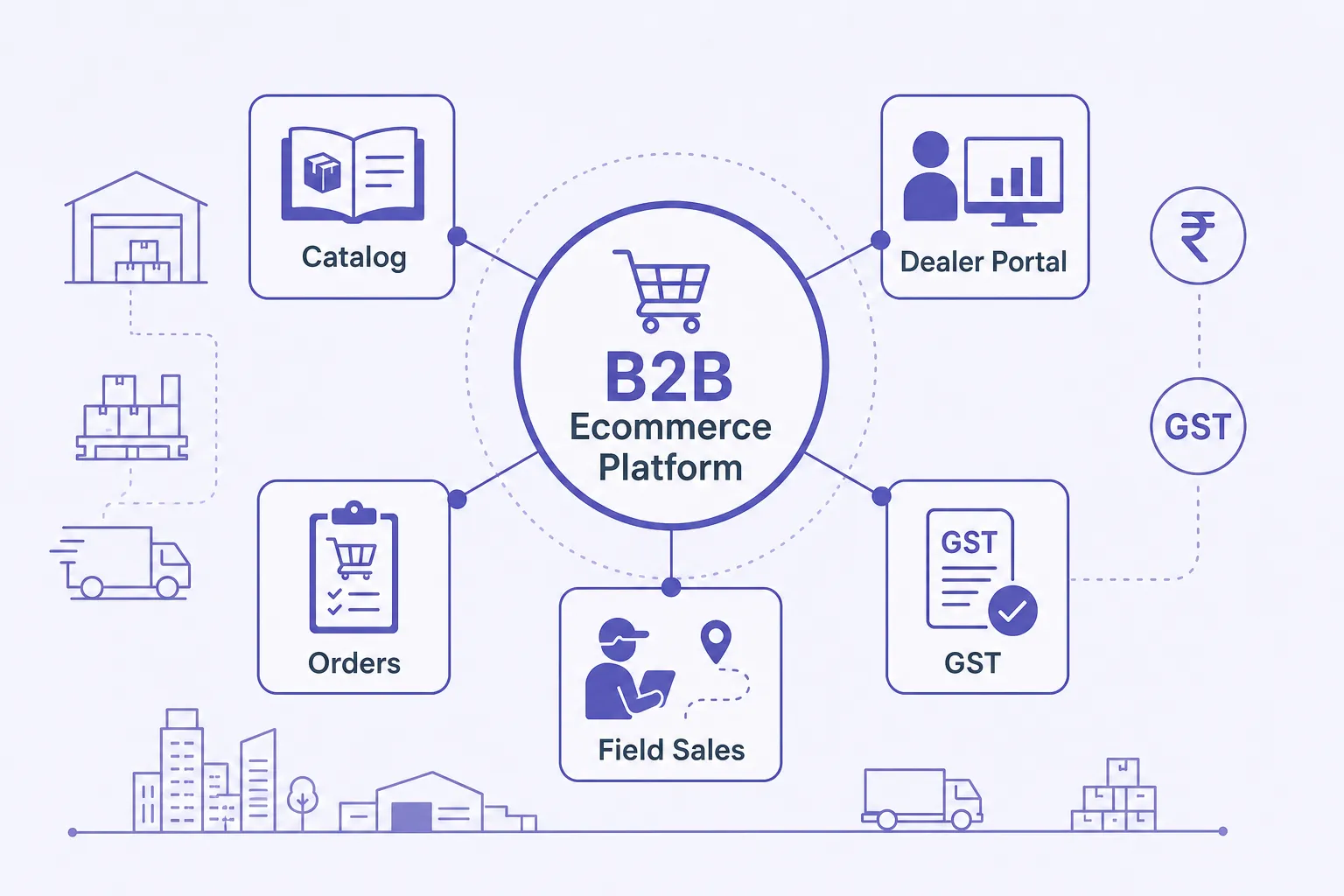
A useful definition for Indian trade: a B2B ecommerce platform is software that connects your product master, dealer-specific pricing, order capture (web, portal, or field app), and GST-ready order data — so sales, ops, and finance stop reconstructing the truth from chat.
What a B2B ecommerce platform really includes
Ignore feature walls for a minute. These building blocks decide whether dealers and reps will use the system after week two.
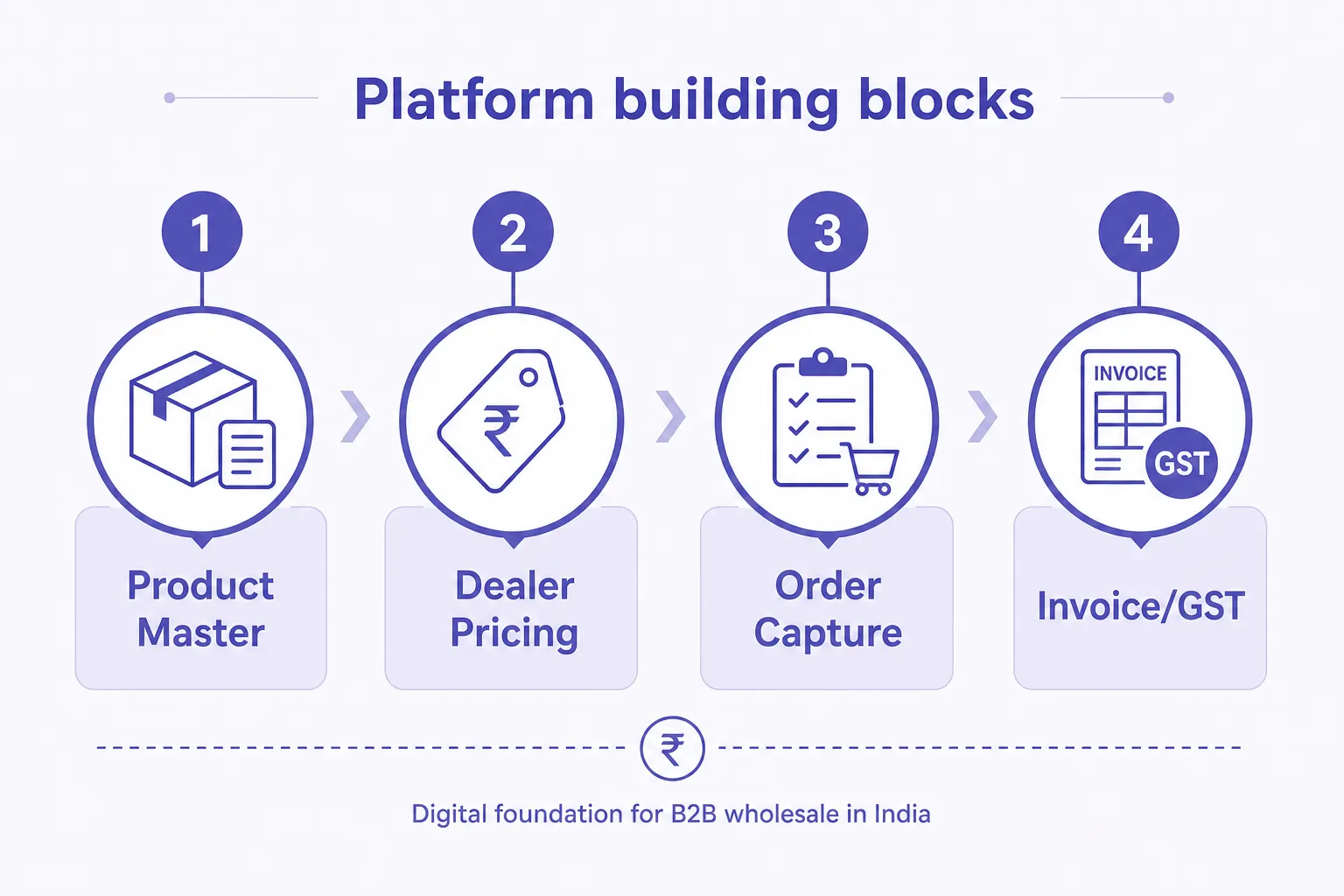
- Product master with SKUs dealers recognise — not internal codes only
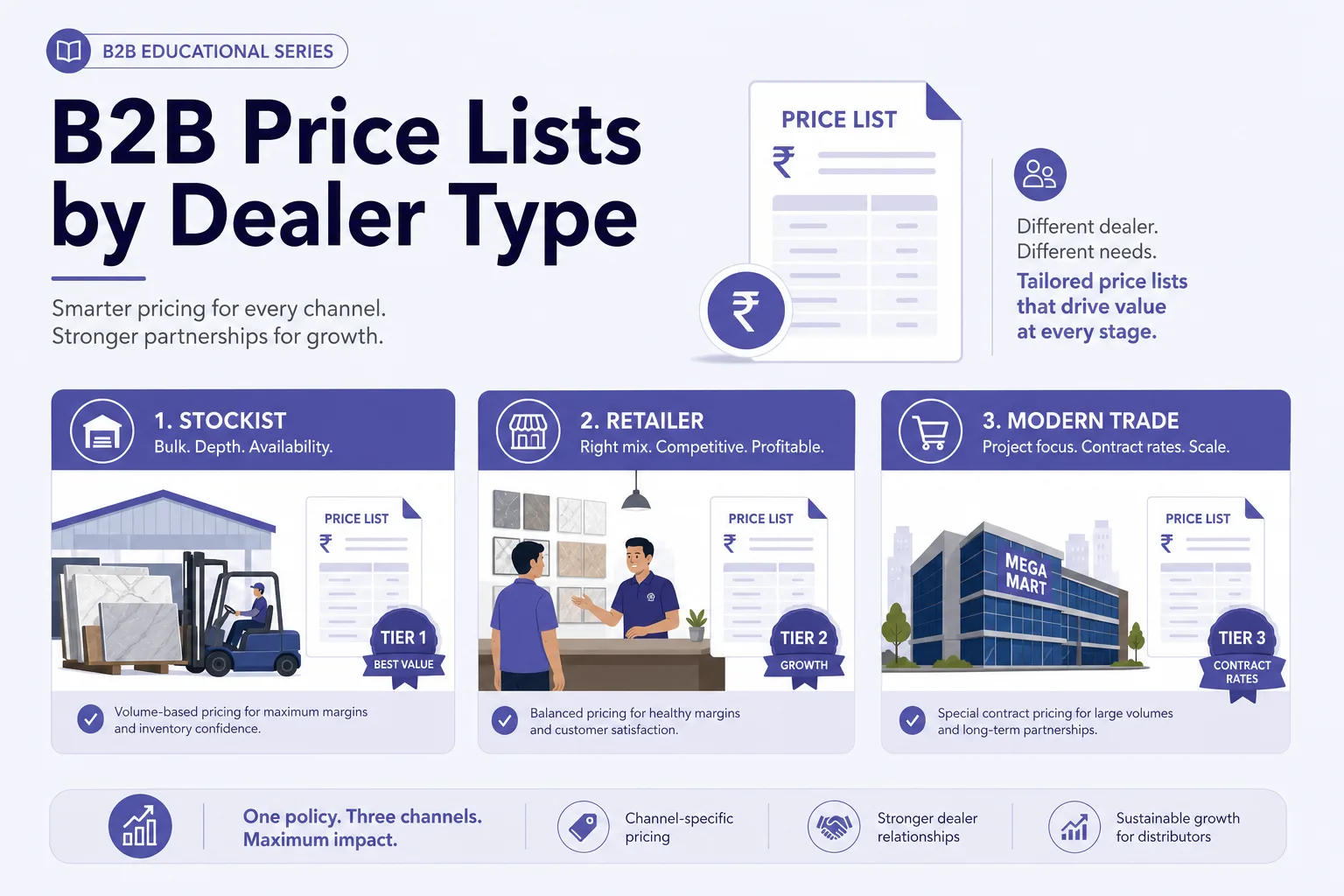
- Buyer-type or dealer-wise price lists that match how you actually sell
- Order capture channels: dealer portal, field mobile, and/or sales desk
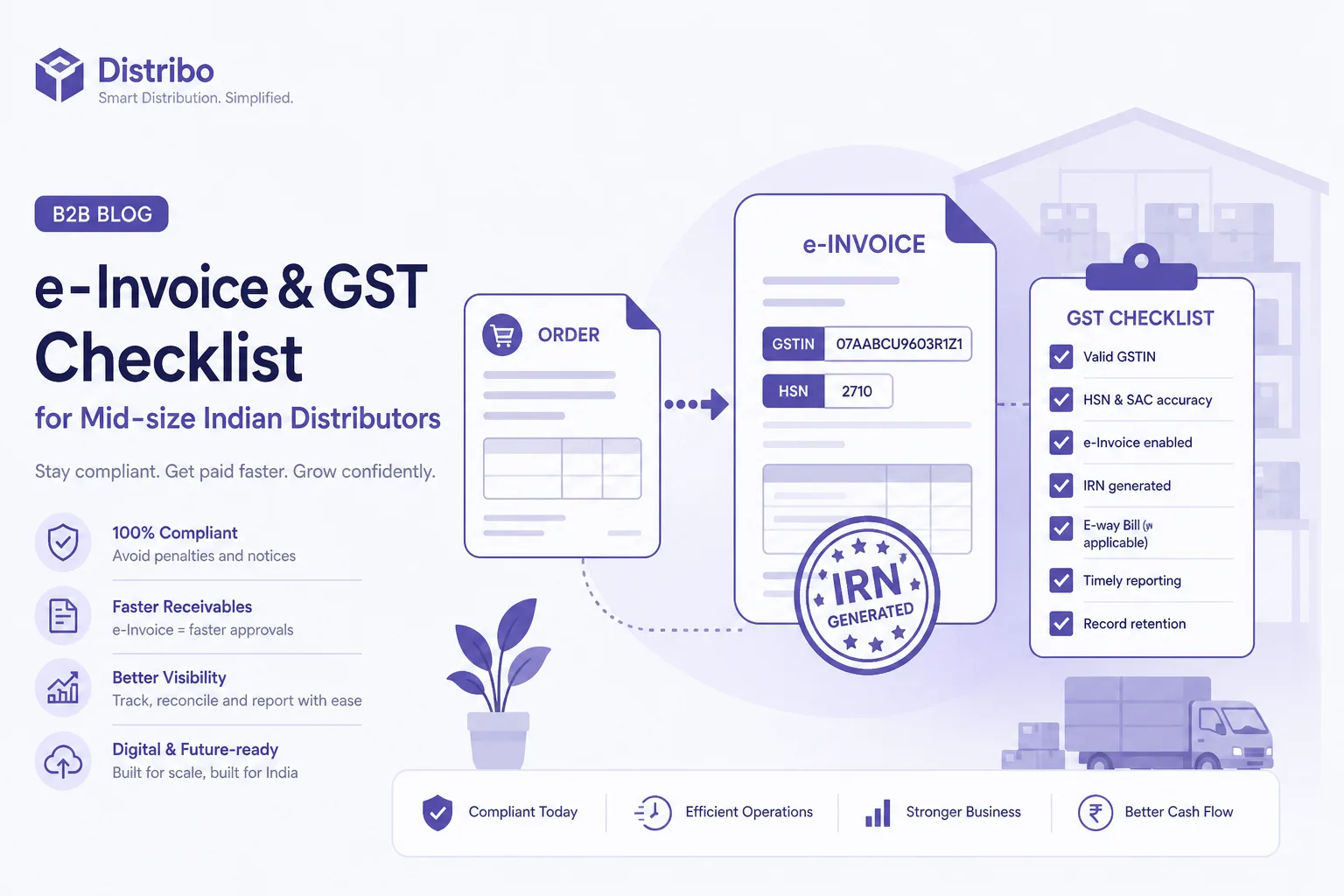
- GST context on the order: GSTIN, HSN, tax split ready for invoicing
- Visibility for the office: one queue, statuses, and fewer screenshot hunts
B2B ecommerce vs a brochure website
A marketing site with a “Contact us” form is not ecommerce. Neither is a PDF catalog on Drive. Ecommerce means the buyer (or your rep on their behalf) can place a structured order against live prices — and your team can fulfil from that record.
Where Indian wholesale teams actually start
Most mid-size manufacturers and distributors do not flip a switch to “full self-serve.” They sequence: clean catalogs and prices → field booking on dense routes → dealer reorders on a portal → tighter GST and ERP sync. Platforms that force a retail-style go-live usually fail the first busy week.
- Fix the top 200–500 SKUs and active dealer price lists
- Book pilot routes or pilot dealers through the system only
- Measure same-day booking and WhatsApp-only exceptions
- Open dealer self-serve for reorders once prices are trusted
- Then deepen schemes, stock views, and ERP connectors
Must-have vs nice-to-have (buyer checklist)
- Must: dealer-wise pricing and order history
- Must: GSTIN/HSN fields that travel with the order
- Must: mobile or offline path if you run route sales
- Nice later: AI assistants, fancy storefront themes, marketplace connectors
- Dangerous early: turning on every module before masters are clean
If the platform cannot survive a dealer visit with weak signal and a messy price list, it will not survive your peak season.
Pattern across distributor evaluations
Metrics that prove the platform is working
- % of orders booked in-system vs WhatsApp/Excel after visits
- Time from order create to confirmation visible to ops
- % of orders with GSTIN and HSN complete at booking
- Dealer reorder rate through portal (once opened)
- Override / special-price chats during live schemes
Questions to ask any B2B ecommerce vendor
- Can prices differ by dealer type without a spreadsheet side-channel?
- What breaks offline or on weak network for field booking?
- How do schemes evaluate on the order — same rules as the office?
- What is the path from order to Tally/ERP without retyping lines?
- Who owns failed syncs and incomplete GST masters in your ops model?
B2Bhaarat is built for this India-first stack — catalogs, field booking, GST-ready orders, promotions, and dealer-facing workflows — so you can grow from booking discipline to portal reorders without pretending you are D2C retail.
Frequently asked questions
What is a B2B ecommerce platform for Indian wholesale?
It is software that connects product masters, dealer-specific pricing, order capture (portal, field, or desk), and GST-ready order data — so teams stop reconstructing orders from WhatsApp and Excel. B2Bhaarat is built for this India-first trade stack.
Is a B2B ecommerce platform the same as a company website?
No. A brochure site collects enquiries; ecommerce produces structured orders against live prices. B2Bhaarat focuses on catalogs, booking, and GST workflows manufacturers and distributors actually run.
How does B2Bhaarat help with B2B ecommerce?
B2Bhaarat helps Indian manufacturers and distributors publish catalogs, capture field and dealer orders, apply schemes, and keep GST context on the order — then grow into portal reorders without pretending you are D2C retail.