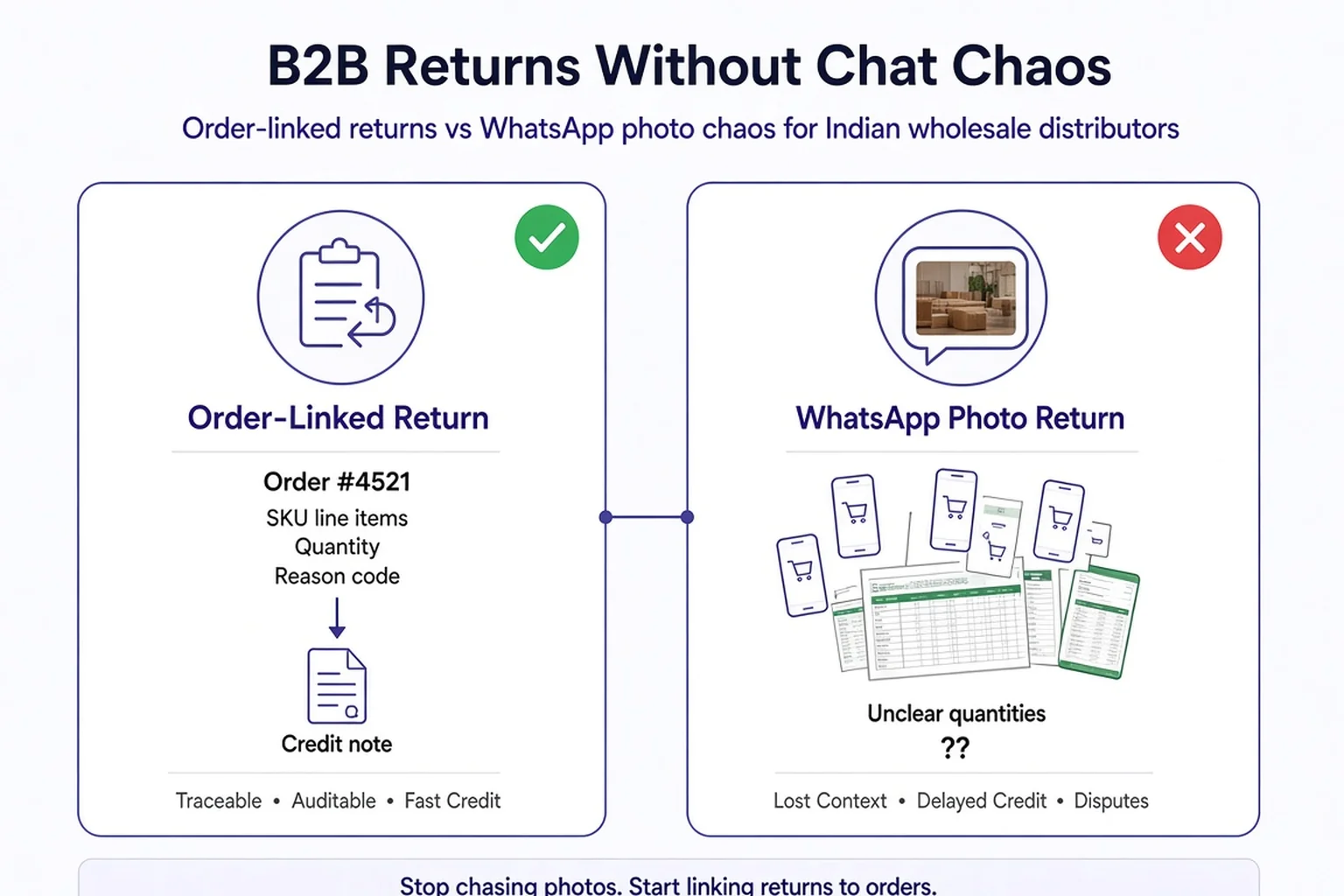
Returns are where goodwill and margin negotiate. Indian wholesale teams lose both when returns live as damaged-stock photos in WhatsApp and credit notes get typed from memory at month-end.
This guide is an operating workflow — not tax advice — for tying returns to orders finance can trust.
Why chat returns fail audit
- No link to original invoice or scheme applied
- Partial qty without line-level match
- Reason missing — expiry vs damage vs wrong dispatch
- Credit note amount disagrees with field promise
- Multiple return threads, no single return ID
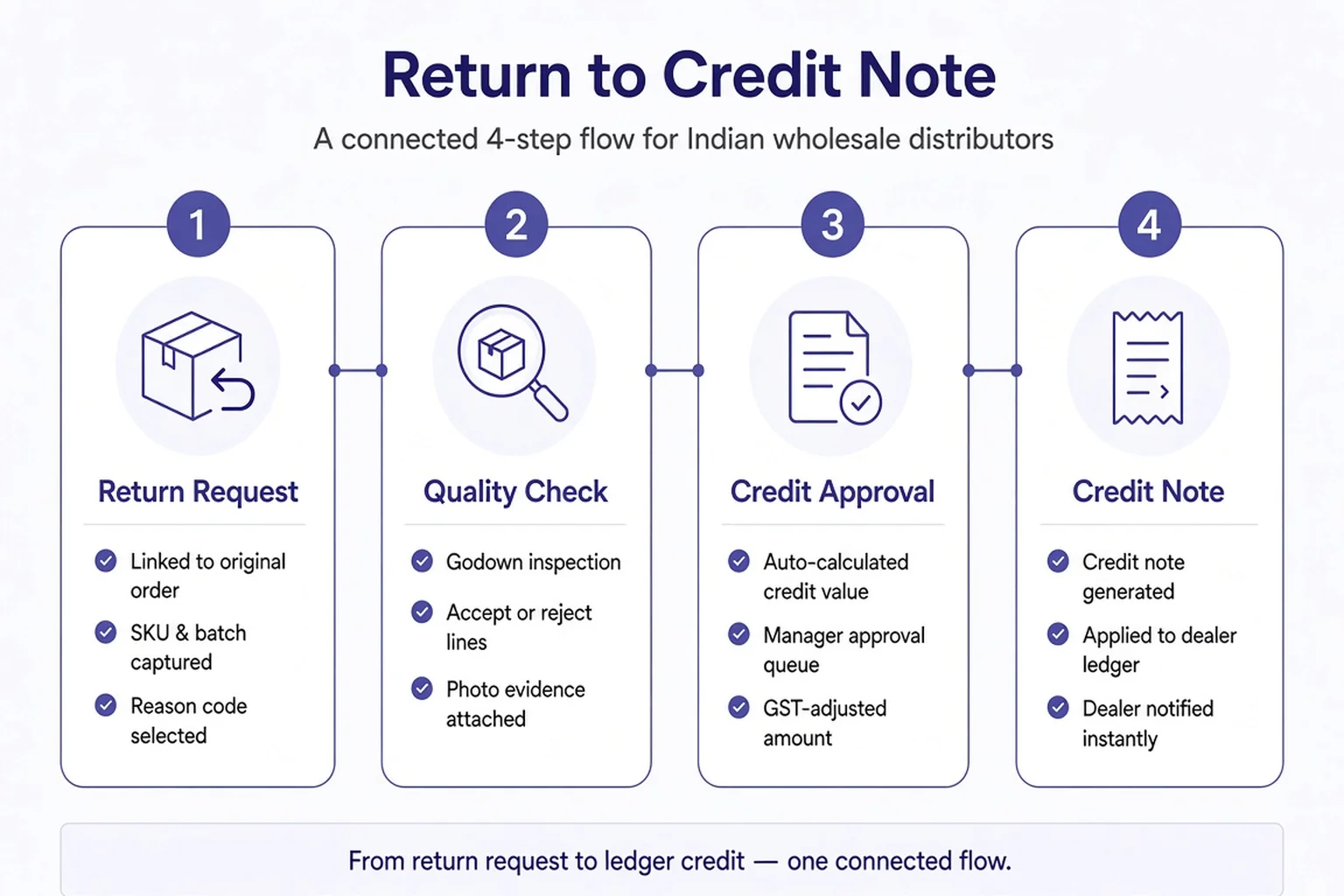
Minimum fields on a return request
- Original order or invoice reference
- SKU, qty, batch if regulated category
- Reason code from a short approved list
- Photo optional — evidence, not the record
- Customer GSTIN context inherited from order
Approval path that does not stall dealers
- Auto-approve within policy thresholds
- Branch manager for damage above ₹X
- Finance for tax value adjustments
- Same-day SLA on festival-adjacent returns
Month-end pairing
Pair open returns with open credit notes. Anything in between is exposure — dealer expects credit, finance has no document.
B2Bhaarat supports returns against original orders with credit-note workflow — so the field, ops, and finance share one return ID.
Frequently asked questions
How should B2B returns be processed for distributors?
Link every return to the original order with SKU, qty, reason code, and inherited GST context — then generate a credit note finance can post. B2Bhaarat supports returns against orders instead of WhatsApp photo threads.
Why do chat-based returns fail at month-end?
Without an order link, finance rebuilds taxable value and scheme impact from memory. Structured returns with reason codes create an audit trail B2Bhaarat and finance can both defend.
Does B2Bhaarat handle credit notes for wholesale returns?
B2Bhaarat supports return workflows tied to original orders with credit-note handoff — so field, ops, and accounts share one return ID.